


Avada includes a blog shortcode you can use anywhere on the site!

Understanding first quarter GDP
GDP shrank at a 5.5 percent annual rate in the first quarter of this year. I find it useful to understand how the major components of GDP are performing, and this graph allows me to do that. Let's hope the Q2 numbers are less bad. Whatever the results, they will be largely independent of the stimulus, which is having only a small positive effect even now. The scary scenario is the one where the labor market continues to decline, and that causes consumption to go negative before the other sectors have time to recover.
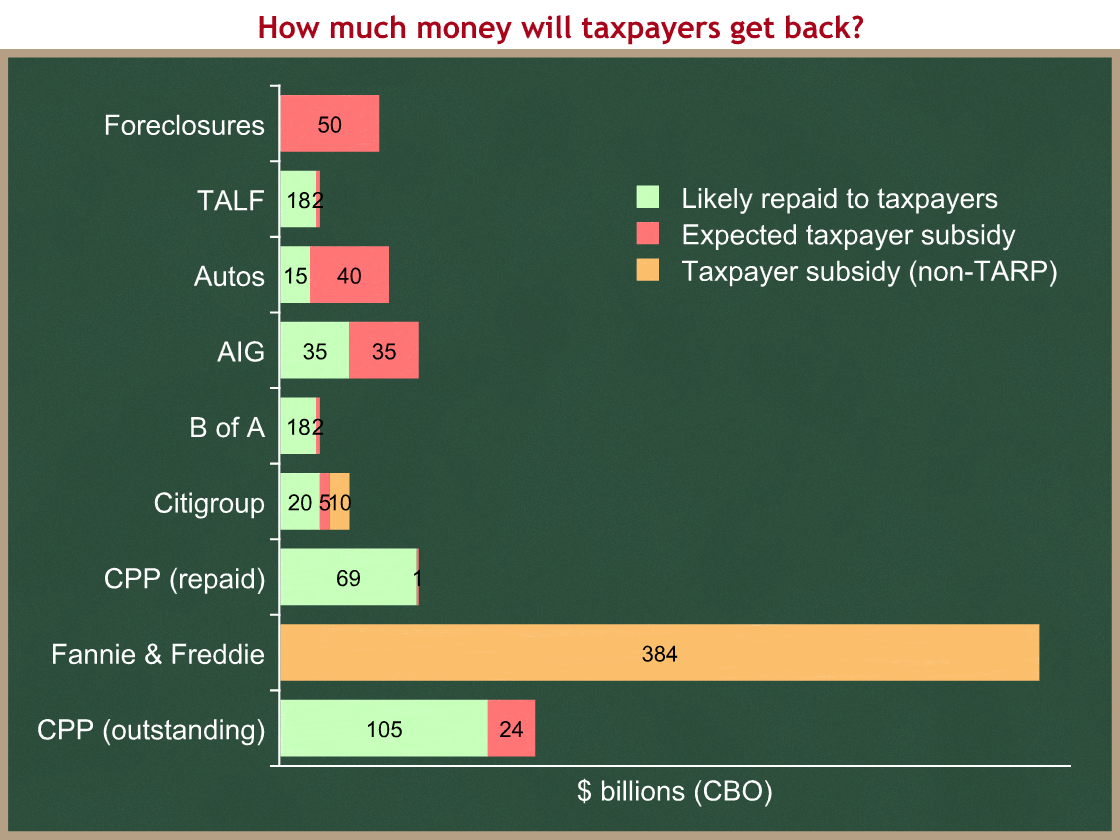
How much bailout money will taxpayers get back?
Of the original $700 B of TARP funding, CBO estimates that $439 B of the original $700 B has been spent, $280 B of that will be repaid and $159 B will not be repaid and will be a cost to the taxpayer. When you include the costs of FDIC actions and the bailouts of Fannie Mae and Freddie Mac, the expected cost to the taxpayer rises to about $553 B.
From borrow-and-spend, to tax-and-spend
House Majority Leader Steny Hoyer and Rep. George Miller write in today's Wall Street Journal in favor of their pay-as-you-go, aka "paygo" rule. I have a different perspective and offer it here in response.
The President’s press conference: health
Is "paying for" a new health care entitlement good enough? Does the President have a plan to slow private sector health cost growth? Will everyone who wants to keep their health plan be able to do so? Are opponents of Kennedy-Dodd defenders of the status quo? Will private sector reforms offset an 11% expansion in federal health entitlement spending? Will a government option drive private insurers out of business? Is a government option negotiable for the President?